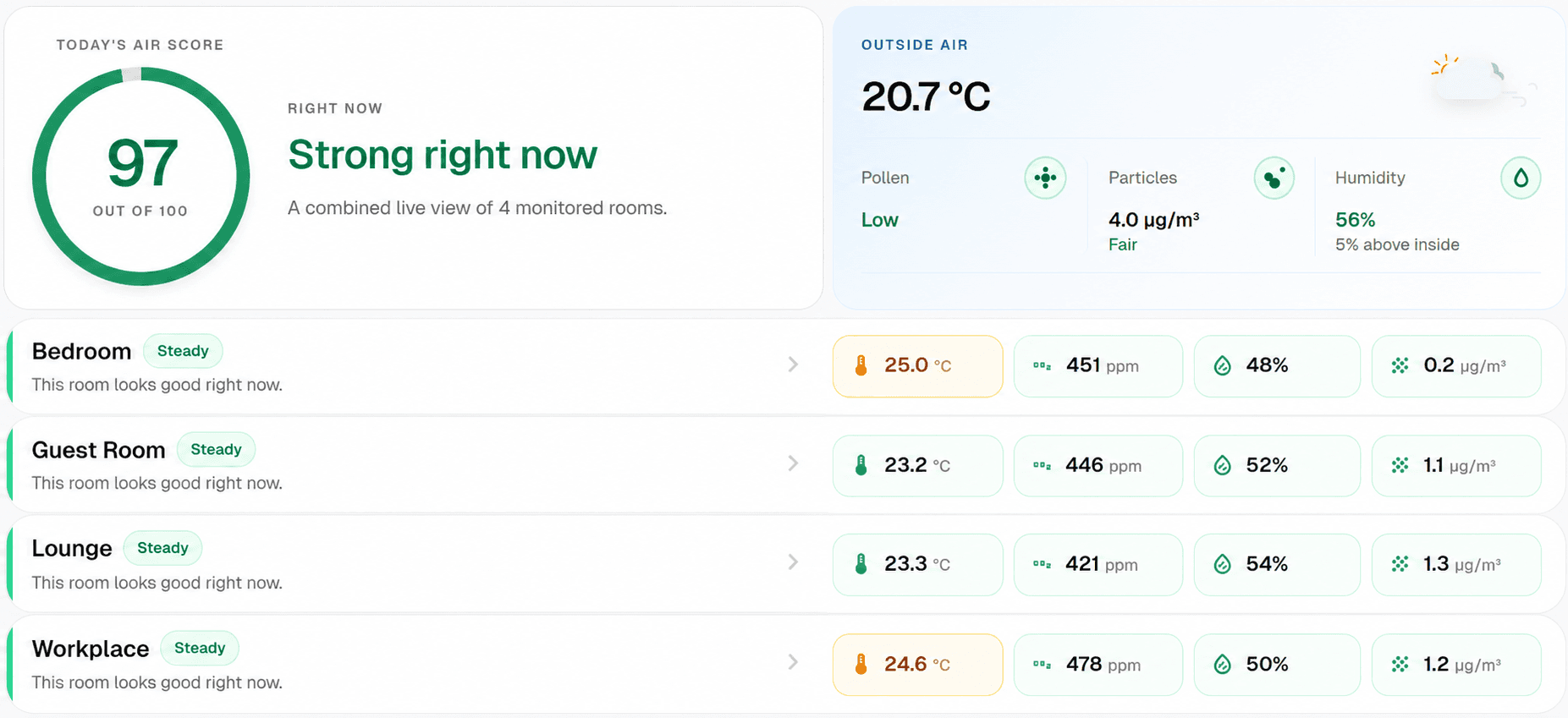
I took Aeroshi from environmental-sensor prototypes to a connected system that can be assembled, activated, monitored remotely and used to produce client reports.
Founder and end-to-end engineer: electronics, ESP32 firmware, cloud architecture, application software and production delivery.
Three decisions that moved Aeroshi from prototype to deployment.
01 / Hardware
Simplify the physical product.
Early builds combined several sensing modules, a battery path and a custom 3D-printed enclosure. They proved the idea, but made assembly, power management and support unnecessarily difficult.
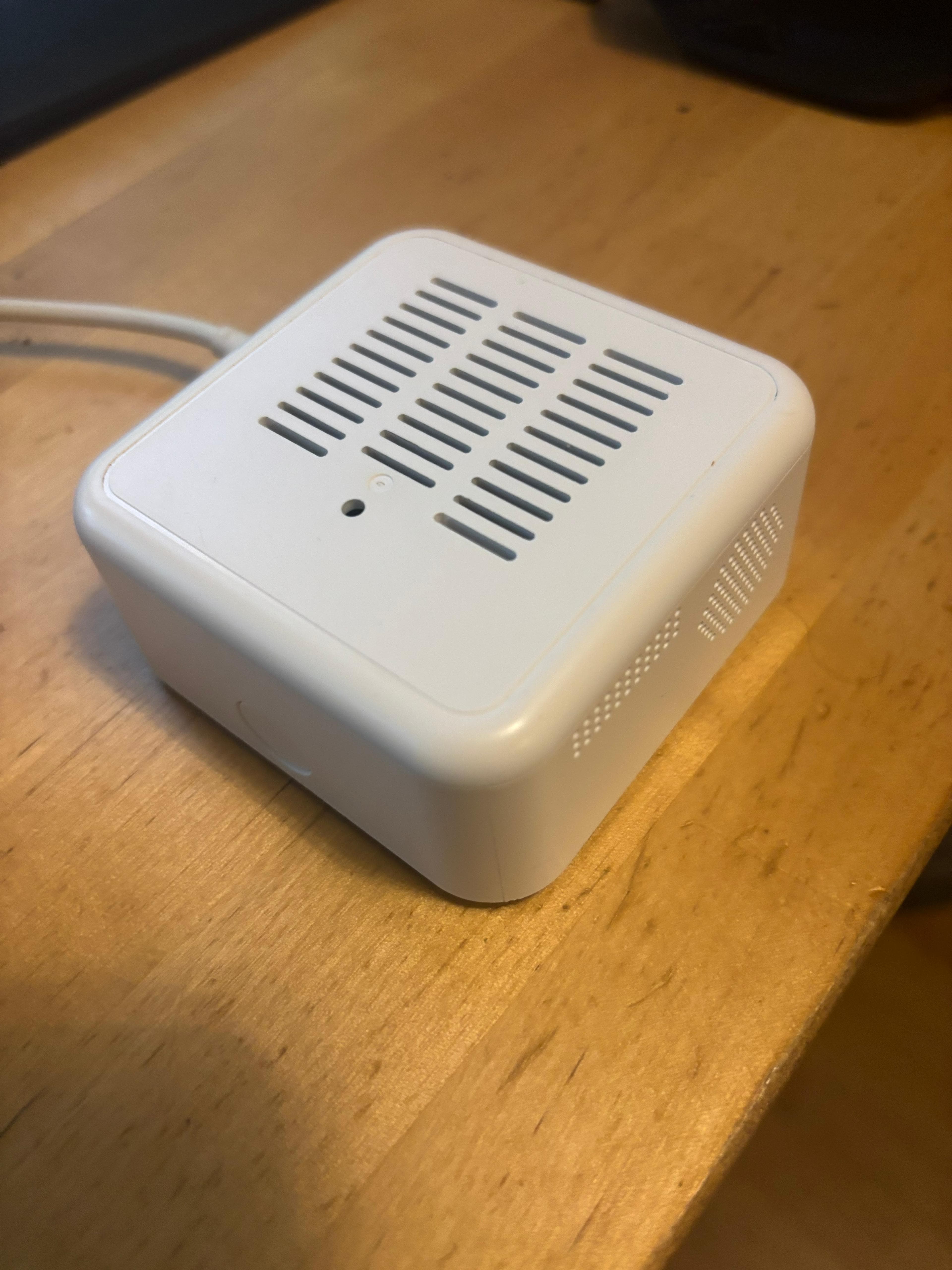
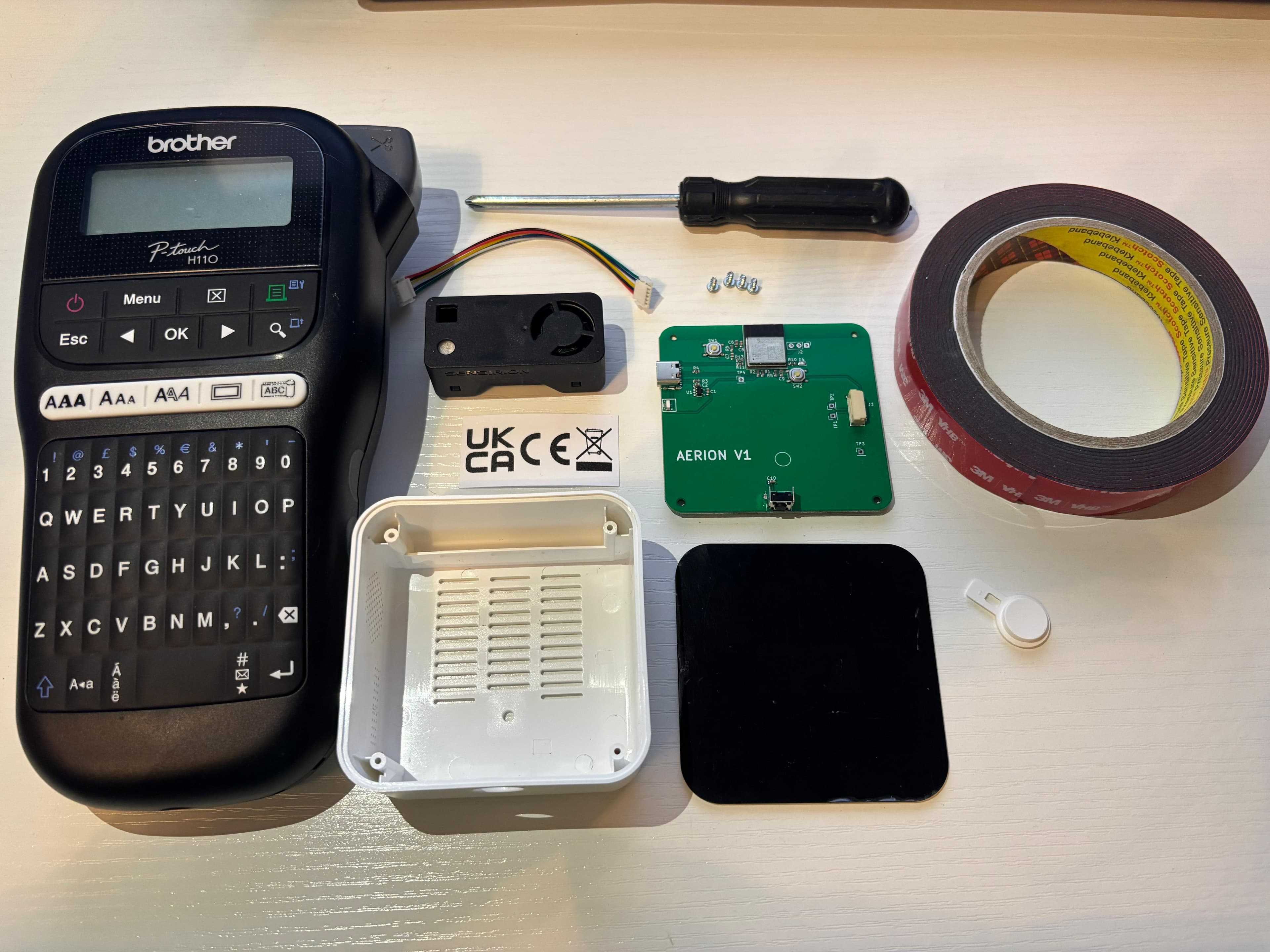
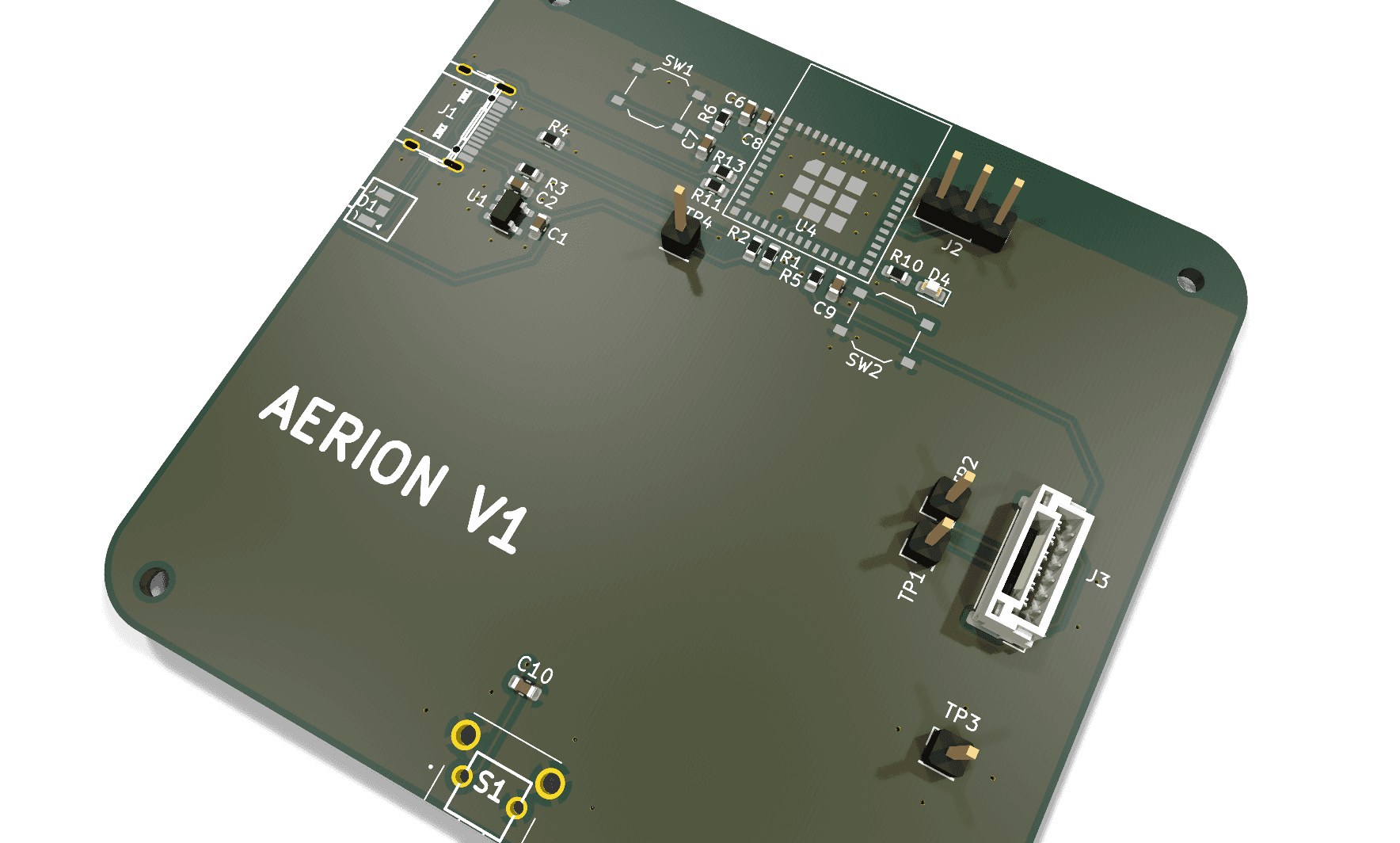
I consolidated sensing around the SEN66, moved to continuous USB-C power and chose a readily available enclosure costing about £5. I then designed a custom two-layer ESP32-C6 PCB around that physical product and the contract-assembly process.
Result: fewer parts, repeatable assembly and a clearer route from PCB manufacture to a finished unit.
02 / Device and cloud
Remove site-specific fragility.
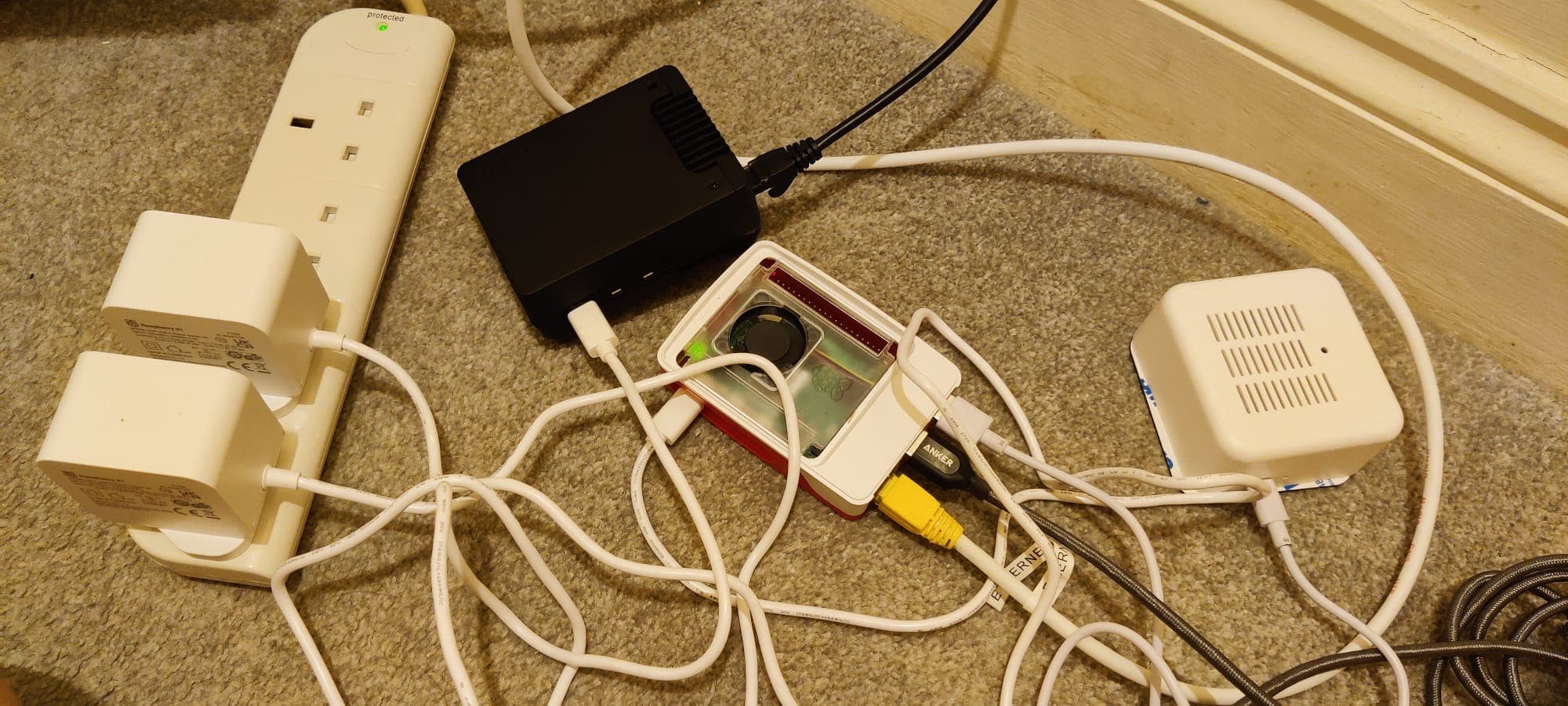
I first explored Matter on the device, then used a Raspberry Pi 5 and Home Assistant to prove integrations. That worked on a friendly home network, but introduced another computer and too many assumptions about Wi-Fi, multicast and site access.
The deployed architecture moved those responsibilities into a cloud-first platform. Devices now have their own identity, send authenticated telemetry and can be supported or updated without a local controller at every site.
Result: the product became simpler to install in unfamiliar buildings and easier to diagnose remotely.
03 / Application and evidence
Turn readings into a defensible output.
Raw telemetry was only the starting point. I built the TypeScript application and data path around relational records, time-series measurements and cached jobs, then added room and multi-room analysis on top.
Findings are gated by data coverage, keep their comparison context and flow into dashboards and validated PDF reports. At the reviewed application revision, all 192 unit tests passed.
Result: clients receive a readable account of recurring conditions and what the evidence can support—not a portal full of unexplained graphs.
Commercial stage: low-volume field deployment with working units assembled, tested and dispatched, backed by a live production service. Aeroshi measures environmental conditions and reports evidence; it does not diagnose health outcomes.
Building a connected product that needs to work in the field?